Understand Your Child's Needs
Recognize persistent reading and spelling difficulties while identifying the individual strengths and learning needs of each child.

Dyslexia Shift | Understanding Dyslexia
Dyslexia Shift | Dyslexia Education & Awareness
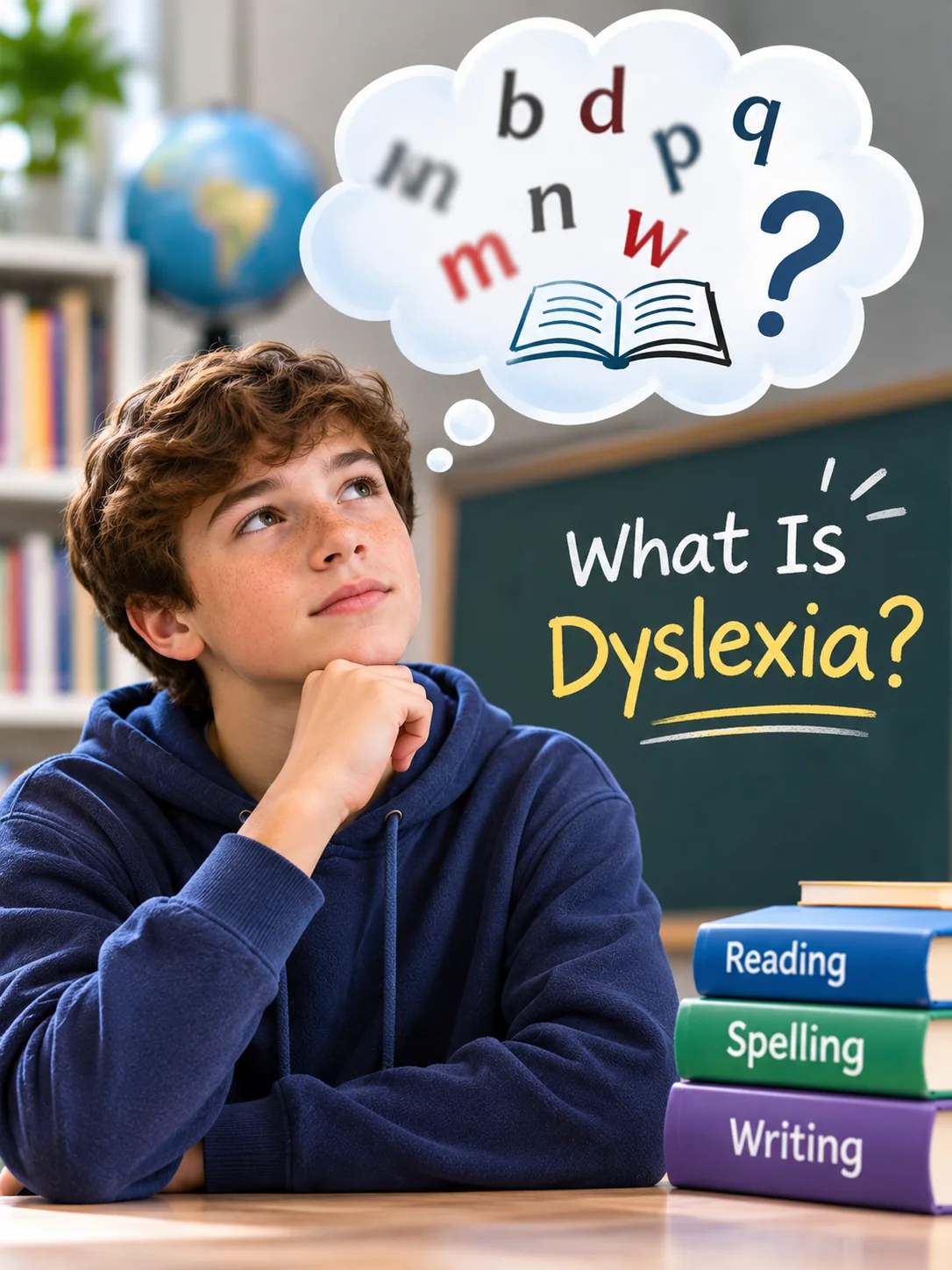
Dyslexia is a neurobiological, language-based learning disability that primarily affects the development of accurate and fluent word reading and spelling skills. The word originates from Greek roots associated with difficulty and words or language.
Children and adults with dyslexia may experience difficulties recognizing written words, connecting letters to speech sounds, decoding unfamiliar words, spelling accurately, and developing reading fluency. These challenges can occur despite adequate intelligence, appropriate educational opportunities, and a strong desire to learn.
Dyslexia does not mean a child cannot learn. It means that certain aspects of reading and written language development require more explicit, systematic, and individualized instruction. Many individuals with dyslexia demonstrate strengths in reasoning, creativity, communication, problem-solving, and other areas of learning.
Dyslexia is generally a lifelong learning difference, but its impact can change significantly with appropriate instruction, experience, and support. Children who receive evidence-based literacy intervention can develop stronger reading and spelling skills and become increasingly independent learners.
In educational settings, dyslexia may qualify a student for specialized instruction, accommodations, or additional services, depending on the individual's needs and applicable eligibility requirements.
1. Dyslexia is a common learning disability. Dyslexia is among the most common specific learning disabilities affecting reading and spelling. Estimates of its prevalence vary depending on the criteria and methods used to identify it.
2. Dyslexia is not related to low intelligence. Dyslexia occurs across the full range of intellectual abilities. A child may demonstrate strong reasoning and understanding while struggling to read or spell words accurately.
3. Dyslexia affects both boys and girls. Dyslexia occurs in children of all genders, cultural backgrounds, and socioeconomic groups. Identification rates may differ depending on referral and assessment practices.
4. Dyslexia has neurobiological and genetic influences. Research has identified differences in the brain systems involved in language and reading. Dyslexia also frequently runs in families, although a family history is not required for identification.
5. Dyslexia is not primarily a vision problem. Dyslexia involves language and reading processes rather than a defect in eyesight. Vision problems can co-exist with dyslexia and should be addressed separately when present.
6. Phonological processing difficulties are common. Many individuals with dyslexia experience difficulty identifying, remembering, or manipulating the individual sounds in spoken words. These skills are important for learning how letters represent sounds.
7. Accurate and fluent word reading may be challenging. Students may read slowly, guess unfamiliar words, misread similar-looking words, or require substantial effort to decode written text.
8. Spelling difficulties are frequently persistent. Children may struggle to connect speech sounds with letters, remember spelling conventions, or apply familiar patterns consistently in their writing.
9. Reading comprehension may be affected. When recognizing words requires significant effort, students may have fewer mental resources available to focus on understanding the text. Language comprehension difficulties can also occur alongside dyslexia.
10. Dyslexia can influence academic performance. Reading and writing demands increase as children progress through school. Without appropriate support, difficulties may affect assignments, examinations, classroom participation, and independent learning.
11. Dyslexia can affect confidence and emotional well-being. Repeated reading struggles may lead to frustration, avoidance, anxiety, or reduced academic confidence. Understanding the child's learning needs and providing appropriate support can help reduce these difficulties.
12. Dyslexia is generally lifelong. Dyslexia is not a temporary condition that children simply outgrow. However, effective instruction and appropriate strategies can substantially improve literacy skills and reduce its impact on everyday learning.
13. Early identification and intervention matter. Recognizing persistent reading difficulties during the early school years allows children to receive targeted instruction before skill gaps become more established.
14. Older learners can also make progress. Although early intervention is beneficial, older children, teenagers, and adults can improve their reading and spelling abilities through appropriate structured literacy instruction.
15. Effective instruction makes a difference. Explicit, systematic instruction in phonemic awareness, phonics, decoding, spelling, vocabulary, fluency, and comprehension can help students with dyslexia develop essential literacy skills.
Young children who may be at risk for dyslexia sometimes experience difficulty recognizing rhymes, identifying the beginning sounds of words, remembering letter names, learning sound-symbol relationships, or developing age-appropriate phonological awareness skills.
Some children may also have a history of speech or language difficulties. However, these characteristics do not automatically indicate dyslexia, and development varies among children.
Children may struggle to connect letters with their corresponding sounds, blend sounds into words, decode unfamiliar words, recognize common spelling patterns, or remember words they have previously encountered.
Reading may be slow and effortful, and spelling errors may persist despite repeated practice. Some children begin to avoid reading activities because they find them frustrating or exhausting.
As reading demands increase, students may experience difficulty reading longer words, maintaining fluency, spelling accurately, understanding written assignments, and expressing ideas in writing.
Some students demonstrate strong verbal understanding but struggle to show their knowledge through independent reading and written work.
Older students may continue to experience slow reading speed, difficulty decoding unfamiliar academic vocabulary, inconsistent spelling, and challenges completing reading-intensive assignments efficiently.
Even when students have developed compensatory strategies, specialized instruction and appropriate accommodations may remain helpful.
Dyslexia is associated with differences in the development and functioning of brain systems involved in language processing and reading. Genetic factors contribute to these differences, and dyslexia frequently occurs among members of the same family.
Many individuals with dyslexia experience difficulty processing the phonological structure of spoken language. This can make it challenging to establish accurate and automatic connections between speech sounds and written letters.
Dyslexia is not caused by laziness, inadequate intelligence, poor parenting, or a lack of motivation. It is also not simply a matter of seeing letters backward.
Reading requires the coordination of several language and cognitive processes. Students must recognize letters, connect them with speech sounds, blend those sounds into words, recognize familiar spelling patterns, and understand the meaning of what they read.
For children with dyslexia, word recognition and decoding may require considerable conscious effort. As a result, reading can be slower and less automatic, even when the child understands spoken language and possesses strong reasoning abilities.
Spelling can also be challenging because students must analyze speech sounds and represent them using the appropriate letters and spelling conventions.
These difficulties may affect written expression, reading fluency, academic confidence, and the ability to complete classroom tasks independently.
Yes. Children with dyslexia can develop stronger reading and spelling skills through appropriate, evidence-based instruction.
Many students benefit from structured literacy instruction that explicitly teaches the relationships between spoken sounds and written symbols, along with the spelling patterns and language structures needed for accurate reading.
Instruction should be systematic, cumulative, responsive to student performance, and supported by regular guided practice.
Progress varies among learners, and there is no single intervention timeline that applies to every child. However, consistent, appropriate instruction can support meaningful improvements in literacy development.
Structured literacy is an evidence-based approach to teaching reading and writing through explicit, systematic, and cumulative instruction.
It addresses essential language components such as phonemic awareness, sound-symbol relationships, phonics, syllable patterns, morphology, vocabulary, sentence structure, reading fluency, and comprehension.
Rather than expecting children to discover reading patterns independently, structured literacy teaches these relationships directly and provides carefully sequenced opportunities for practice and review.
Orton–Gillingham-based approaches incorporate these structured teaching principles and often include multisensory activities that connect seeing, hearing, speaking, and writing during instruction.
At Dyslexia Shift, I provide individualized, one-on-one virtual Academic Language Therapy for children experiencing dyslexia and related language-based learning difficulties.
My approach focuses on understanding each learner's current skills, identifying areas that require additional instruction, and providing structured teaching designed to support literacy development.
Specialized programs include Take Flight, a comprehensive intervention for students with dyslexia; Pre-Flight, an early literacy program for younger learners; and Lexercise, an online structured literacy program combining professional instruction with guided practice.
Children do not necessarily need a formal dyslexia diagnosis before beginning targeted literacy instruction. However, a comprehensive evaluation may be important when difficulties are persistent or when school-based accommodations and services are being considered.
If your child consistently struggles with learning letter sounds, decoding unfamiliar words, spelling, reading fluently, or completing reading-related schoolwork, it may be helpful to seek professional guidance.
Persistent difficulties should not automatically be attributed to a lack of effort or motivation. Early conversations with teachers, literacy specialists, and qualified evaluators can help clarify your child's needs.
Appropriate assessment and instruction can help families understand the reasons behind reading difficulties and identify useful next steps.
For additional information about dyslexia, identification, educational rights, accommodations, and structured literacy instruction, explore the International Dyslexia Association (IDA) Dyslexia Handbook.
Important: This information is intended for educational purposes and does not replace a comprehensive evaluation or formal diagnosis by an appropriately qualified professional.
Recognize persistent reading and spelling difficulties while identifying the individual strengths and learning needs of each child.
Explicit, systematic, and cumulative instruction supports the development of decoding, spelling, fluency, and related language skills.
One-on-one virtual instruction responds to each learner's current abilities, instructional progress, and specific literacy challenges.
Targeted teaching, guided practice, and meaningful encouragement help learners build stronger literacy skills and greater independence.
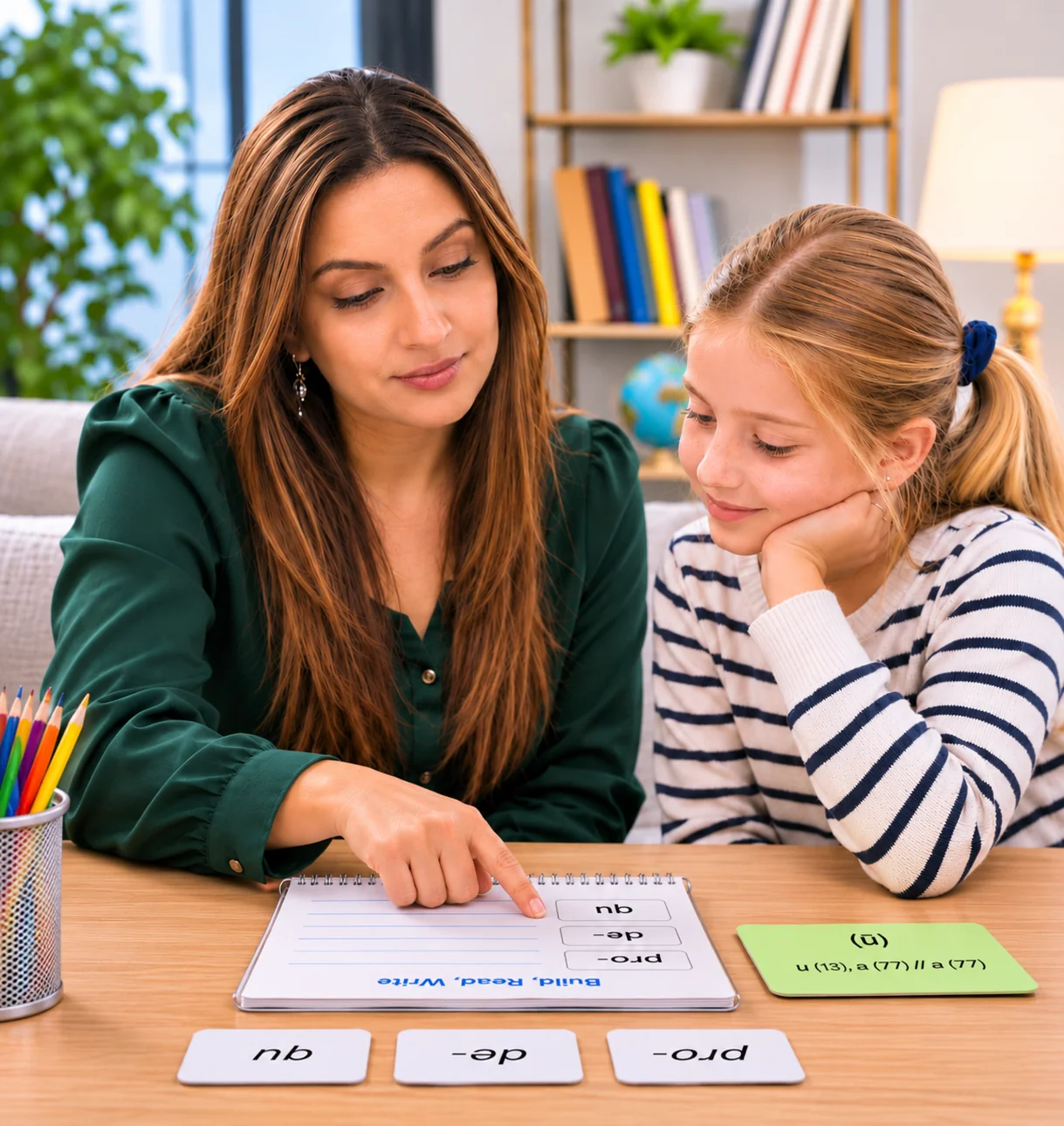
If your child struggles with reading, spelling, or written language, understanding their learning needs can help you make informed decisions. At Dyslexia Shift, I offer individualized virtual Academic Language Therapy through structured literacy programs designed to support meaningful skill development. Let's discuss your concerns and explore the next steps for your child.
Book a Free Consultation