Recognize Learning Differences
Understand how handwriting, mathematics, motor coordination, and literacy challenges may affect each child's learning experience.

Dyslexia Shift | Learning Differences & Awareness
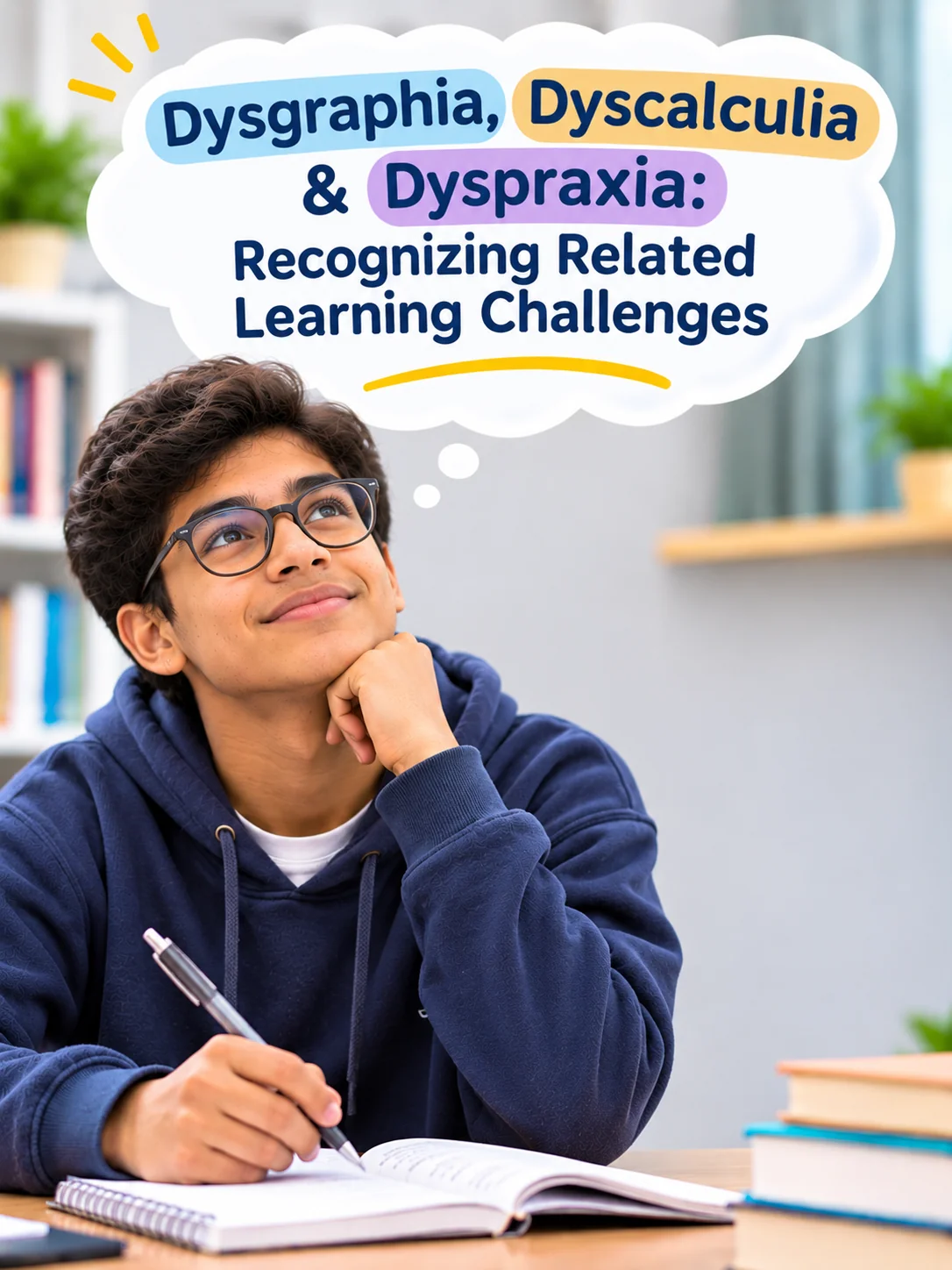
Dyslexia Shift | Understanding Learning Differences
Children learn and develop skills in different ways. While dyslexia primarily affects word reading and spelling, other learning and developmental conditions may influence handwriting, mathematics, motor coordination, and everyday academic tasks.
Dysgraphia, dyscalculia, and dyspraxia are distinct conditions that may occur independently or alongside dyslexia. Understanding their characteristics can help parents recognize persistent difficulties, communicate with educators, and seek appropriate professional guidance.
Not every child who struggles with handwriting, mathematics, or coordination has a learning disorder. The frequency, persistence, and impact of these difficulties should be considered through appropriate evaluation.
Dysgraphia is a term commonly used to describe significant difficulties with handwriting and the physical production of written text. Depending on the learner's profile, difficulties may involve letter formation, writing speed, legibility, and the coordination of movements needed for handwriting.
Some children also experience difficulties with spelling or written expression. However, problems organizing ideas in writing are not necessarily caused by handwriting difficulties and may require separate assessment.
Slow or Effortful Handwriting: Taking considerably longer than expected to write letters, words, or sentences, even when the child understands the assignment.
Poor Handwriting Legibility: Producing letters that are difficult to recognize because of inconsistent shapes, spacing, alignment, or formation.
Difficulty Forming Letters: Struggling to remember or execute the movements needed to form letters consistently and efficiently.
Inconsistent Letter Size and Shape: Writing letters with noticeably different sizes, proportions, or orientations within the same word or sentence.
Difficulty Copying Written Information: Taking excessive time to copy words, sentences, or information from a board, book, or worksheet.
Challenges with Fine Motor Coordination: Some children experience difficulty controlling the small hand and finger movements involved in handwriting and other precise activities.
Unusual Pencil Grip or Paper Position: Holding a pencil with excessive tension or positioning the wrist or paper in ways that make writing uncomfortable or inefficient. Pencil grip alone is not a diagnostic indicator.
Frequent Erasing and Rewriting: Repeatedly correcting letter shapes, spacing, or alignment because written work does not appear as intended.
Difficulty Using Lines and Margins: Struggling to keep writing aligned with ruled lines, maintain consistent spacing, or organize text neatly on a page.
Hand Fatigue or Discomfort: Experiencing tiredness, cramping, or discomfort during extended handwriting activities.
Disorganized Written Work: Producing written assignments that appear crowded, inconsistently spaced, or difficult to follow because of handwriting and layout challenges.
Difficulty Expressing Knowledge in Writing: Some students can explain ideas clearly in conversation but produce much less written work because handwriting requires substantial effort.
When handwriting is slow or effortful, children may struggle to complete classroom assignments, take notes, copy instructions, or demonstrate their knowledge through written responses.
These challenges can become more noticeable as academic demands increase and students are expected to write longer passages independently.
Appropriate support may include explicit handwriting instruction, occupational therapy when motor difficulties are present, and accommodations such as typing or alternative ways to complete written assignments.
Dyscalculia is a specific learning difficulty affecting the development of mathematical skills, particularly understanding numbers, quantities, and arithmetic relationships.
Children with dyscalculia may struggle with foundational number concepts even when they demonstrate appropriate abilities in other academic areas.
Mathematics difficulties can also arise from other causes, including gaps in instruction, attention challenges, or language-related difficulties. Persistent problems should be evaluated rather than automatically attributed to dyscalculia.
Difficulty Understanding Number Concepts: Struggling to understand what numbers represent and how quantities relate to one another.
Weak Number Sense: Difficulty estimating quantities, comparing numbers, recognizing numerical patterns, or understanding which number is greater or smaller.
Difficulty Counting Accurately: Frequently losing track while counting, skipping numbers, or struggling to connect number words with objects.
Slow Recall of Mathematical Facts: Taking considerable time to retrieve basic addition, subtraction, multiplication, or division facts.
Difficulty Memorizing Arithmetic Facts: Struggling to retain number combinations and basic calculations despite repeated instruction and practice.
Challenges with Mathematical Procedures: Difficulty remembering or following the steps required to solve arithmetic problems.
Difficulty Understanding Place Value: Confusion about the value of digits within numbers, particularly when working with larger numbers or decimal values.
Frequent Calculation Errors: Making persistent mistakes when performing basic arithmetic operations or applying mathematical procedures.
Difficulty with Mathematical Vocabulary: Struggling to understand or remember terms such as greater than, less than, difference, sum, fraction, or equivalent.
Challenges with Time and Measurement: Some children experience difficulty reading analog clocks, estimating time, understanding measurement units, or working with money.
Difficulty Organizing Mathematical Work: Struggling to align numbers, copy calculations accurately, or keep track of steps in multi-part problems.
Difficulty Applying Mathematical Concepts: Understanding a procedure during instruction but struggling to apply it independently or in unfamiliar situations.
Dyscalculia can affect classroom mathematics, homework completion, and everyday activities involving quantities, time, money, or measurement.
Children may become frustrated when mathematical tasks require skills that have not become automatic.
Support may include explicit mathematics instruction, visual representations, carefully sequenced practice, and accommodations appropriate to the learner's needs.
Specialized mathematics intervention is distinct from reading-focused Academic Language Therapy and may require a professional with specific expertise in mathematics learning difficulties.
Dyspraxia is a term often used in connection with difficulties planning, organizing, and coordinating movements. It is frequently associated with developmental coordination disorder (DCD), although terminology and diagnostic usage vary.
Children with motor coordination difficulties may struggle with activities requiring precise movement, coordinated body actions, or the learning of new motor skills.
Difficulty Planning Movements: Struggling to organize the sequence of physical actions needed to complete a task.
Poor Motor Coordination: Appearing unusually clumsy or experiencing difficulty coordinating body movements during everyday activities.
Challenges with Fine Motor Skills: Difficulty using scissors, fastening buttons, manipulating small objects, or performing tasks requiring precise hand movements.
Difficulty with Gross Motor Skills: Struggling with activities such as balancing, jumping, catching a ball, riding a bicycle, or participating in certain sports.
Difficulty Learning New Motor Sequences: Requiring additional instruction and practice to learn movements that involve several coordinated steps.
Handwriting Challenges: Some children experience slow or effortful handwriting because of difficulties with motor planning and coordination.
Difficulty Organizing Physical Tasks: Struggling to manage activities involving several movements, such as dressing, preparing materials, or using classroom equipment.
Speech Motor Planning Difficulties: Some children have difficulty planning and coordinating movements required for speech production. However, childhood apraxia of speech is a distinct condition that requires specialized speech-language evaluation.
Motor coordination difficulties may affect handwriting, classroom participation, physical education, self-care activities, and tasks requiring coordinated movements.
Children may require additional time to complete certain activities and may become frustrated when physical tasks are more difficult than expected.
Occupational therapists, physical therapists, and other appropriately qualified professionals may provide assessment and support depending on the child's needs.
Yes. A child may experience more than one learning or developmental condition.
For example, a student with dyslexia may also have handwriting difficulties, mathematics learning challenges, ADHD, or motor coordination difficulties.
However, these conditions are not interchangeable, and one does not automatically cause another.
A comprehensive evaluation can help identify the different factors contributing to a child's difficulties and guide appropriate recommendations.
Dyslexia: Primarily affects accurate and fluent word reading and spelling, often involving phonological processing difficulties.
Dysgraphia: Primarily involves handwriting and written production difficulties, including letter formation, legibility, and writing fluency.
Dyscalculia: Primarily affects mathematical learning, number sense, and arithmetic development.
Dyspraxia: Primarily involves difficulties with motor planning and coordination.
Although their characteristics can overlap, each condition requires an understanding of the specific skills affected and the support most appropriate for the learner.
Consider seeking professional guidance when difficulties with handwriting, mathematics, coordination, or academic learning persist over time and significantly affect your child's school performance or everyday activities.
Signs that may warrant further attention include unusually slow handwriting, persistent difficulty understanding basic number concepts, significant motor coordination challenges, or difficulties that continue despite appropriate instruction and practice.
Evaluation may involve educational psychologists, school psychologists, occupational therapists, speech-language pathologists, or other qualified specialists, depending on the area of concern.
Early identification and appropriate support can help children develop useful skills, access learning opportunities, and reduce unnecessary frustration.
At Dyslexia Shift, I specialize in individualized, one-on-one virtual Academic Language Therapy for children with dyslexia and related language-based literacy difficulties.
My structured literacy programs focus on foundational reading, spelling, and written language skills through explicit, systematic, cumulative, and multisensory instruction.
Depending on your child's learning profile, specialized literacy instruction may help address difficulties with decoding, spelling, sound-symbol relationships, and aspects of written language.
However, Academic Language Therapy is not a replacement for specialized mathematics intervention, occupational therapy, motor coordination treatment, or other services that may be necessary for dyscalculia, dysgraphia, or dyspraxia.
During an initial consultation, we can discuss your child's learning concerns and whether literacy therapy, further evaluation, or another type of professional support may be appropriate.
Parents can help by recognizing that persistent academic or motor difficulties are not necessarily caused by a lack of effort or motivation.
Provide opportunities for children to demonstrate their strengths, break challenging tasks into manageable steps, and encourage progress without making comparisons with other learners.
When appropriate, accommodations such as additional time, assistive technology, alternative writing methods, or visual supports may help children participate more successfully in learning activities.
Communication between families, educators, and qualified specialists can help ensure that instruction and support address the child's individual needs.
The International Dyslexia Association (IDA) provides educational resources about dyslexia and related learning difficulties, including information on identification, instruction, and support.
Important: This information is intended for educational awareness only. The characteristics described do not independently establish a diagnosis, and appropriate assessment should be conducted by qualified professionals.
Understand how handwriting, mathematics, motor coordination, and literacy challenges may affect each child's learning experience.
Targeted Academic Language Therapy addresses foundational reading, spelling, and written language skills according to the learner's needs.
Recognizing distinct learning challenges helps families identify when specialized assessment or additional services may be necessary.
Supportive instruction, realistic expectations, and recognition of individual strengths help children develop confidence and independence.
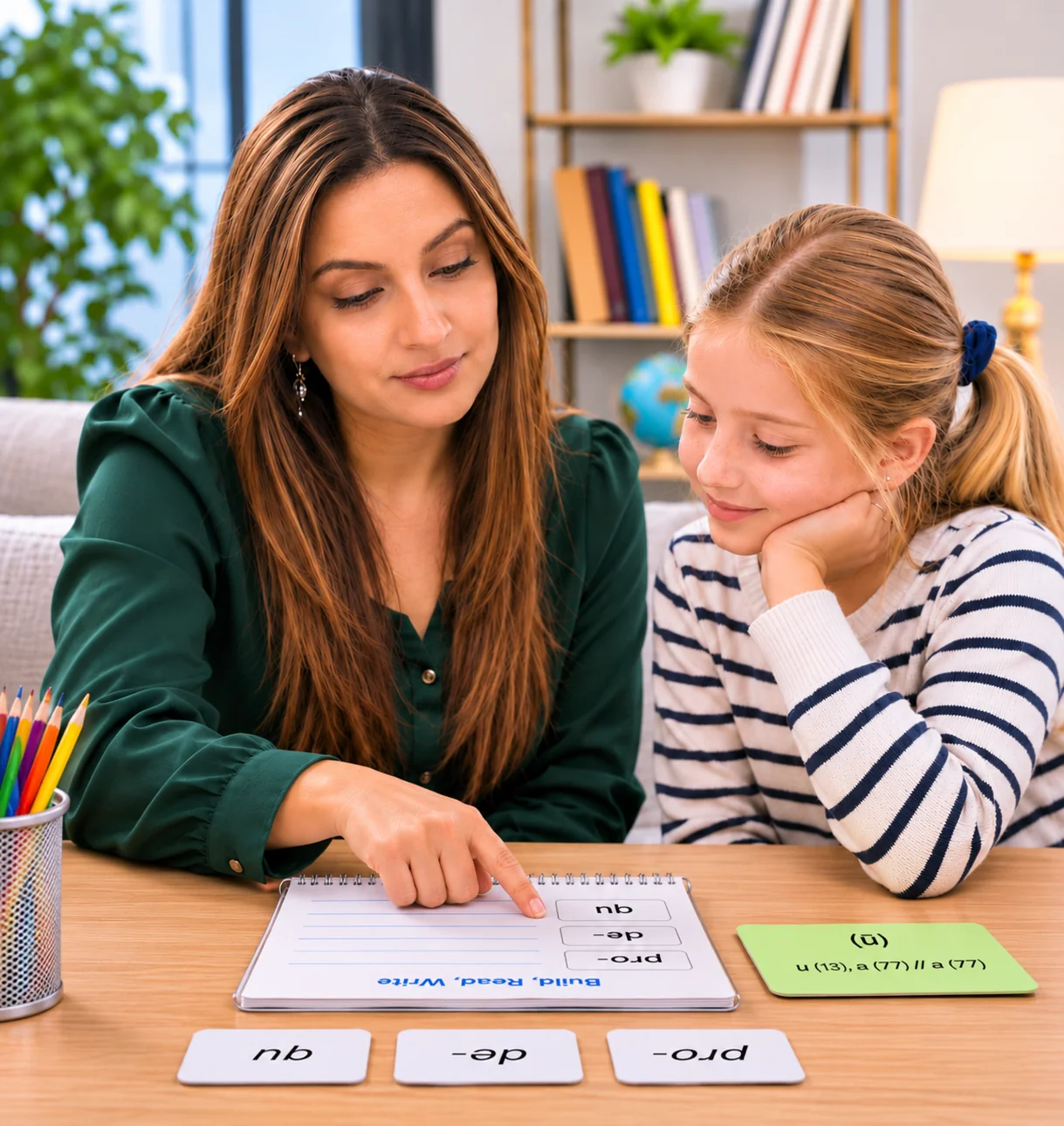
If your child experiences persistent challenges with reading, spelling, handwriting, mathematics, or coordination, understanding their individual needs is an important first step. At Dyslexia Shift, I specialize in structured literacy intervention for dyslexia and related language-based learning difficulties. Let's discuss your concerns and explore whether individualized Academic Language Therapy or additional specialist support may be appropriate.
Book a Free Consultation